

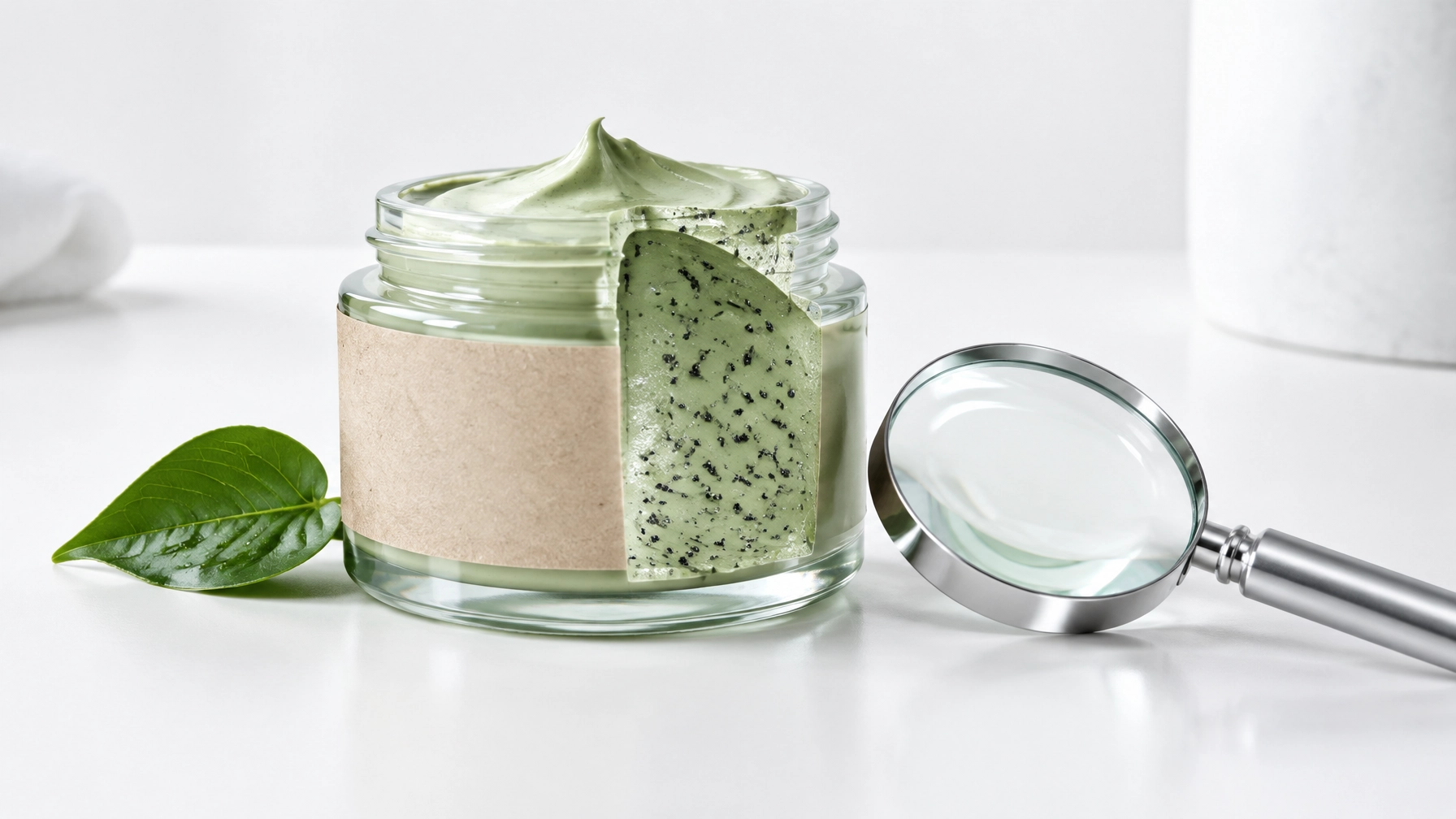
Have you experienced an allergic reaction after trying an organic handmade product that promised miracles? If your skin became itchy, red or uncomfortable, it is reasonable to ask what caused it. But can you tell from the label, or from the reaction alone?
Nickel is one possible concern for people with a confirmed nickel allergy. It can occur as an unintended trace impurity in some cosmetic ingredients. Yet a reaction does not automatically mean nickel was responsible, and “natural” or “handmade” does not prove a product contains it.
The useful question is not whether every handmade product is unsafe. It is whether the ingredients, manufacturing process and finished product have been controlled and tested for the risks that matter to you.
How could nickel get into skincare?
Nickel is a naturally occurring metal found in the environment. Small amounts may be present in some raw materials, particularly mineral ingredients, pigments and powders. Their composition can vary with source and processing.
Plant-derived and mineral ingredients are not automatically free from trace metals either. Safety reviews of cosmetic raw materials report that naturally sourced clays can carry trace metals, including nickel, at levels that vary with the clay type and origin, while the metal content of botanical ingredients such as oat and wheat-derived materials varies with strain, soil and cultivation. Water, equipment, processing surfaces and packaging may also be possible sources of contamination if they are not appropriately selected and controlled.
That does not mean a jar of homemade cream is likely to contain a harmful amount of nickel. It means the source of an ingredient is not proof of its purity. “Organic,” “natural” and “made by hand” describe aspects of a product or process; they do not, on their own, establish its nickel content.

Does nickel in a product always cause a reaction?
No. The presence of nickel and the risk of a skin reaction are not the same thing.
Nickel is a well-known cause of allergic contact dermatitis. In a person who is sensitized, exposure to nickel that is available to the skin can cause symptoms such as itching, redness, swelling or eczema. But the likelihood of a reaction depends on factors including how much nickel is present, how readily it can be released from the product, where it is applied and how often the skin is exposed.
Research helps show why the details matter. A study of mineral makeup tested on 23 nickel-sensitive participants found no skin reactions under the study conditions, despite nickel impurities being detected in some materials. That result does not prove every nickel-containing cosmetic is safe. It shows that detectable nickel alone does not tell us whether a product will trigger a reaction.
If you have recurring symptoms, do not assume nickel is the cause. Fragrance, preservatives, botanical ingredients and other substances can also trigger contact reactions. A dermatologist can help identify likely causes and advise whether patch testing is appropriate.
What might be different about a homemade product?
Could the maker have sourced clean ingredients and worked carefully? Yes. Many small makers take quality seriously, and a handmade label alone is not evidence of poor safety.
But does a home kitchen usually have the same documented controls as a professional manufacturing facility? Not necessarily. The difference is often not the maker’s intentions. It is whether the process has been checked and recorded.
A product made at home may use ingredients with variable specifications, equipment that has not been assessed for cosmetic production, or containers that have not been evaluated for compatibility. Tap water, utensils, storage and handling can also affect a formula. None of these factors automatically makes a product unsafe, but each can introduce uncertainty.
A laboratory-made product is not automatically safe just because it was made in a lab. The relevant questions are whether the manufacturer controls raw materials, follows suitable hygiene practices, checks the finished formula and keeps reliable batch records.
Why does consistency and preservation matter?
Is the formula the same every time? For a product used regularly, consistency matters. Ingredient quantities, mixing and handling can affect how a cream feels and performs. A formula with water also needs an appropriate preservation system to help control the growth of microorganisms during use.
Can you tell a product’s shelf life just by looking at it? Not reliably. Stability testing helps assess how a formula changes over time and under different storage conditions. Preservative efficacy testing helps determine whether the preservation system works as intended. Microbiological testing can help check for contamination.
These tests do not specifically prove that a product is nickel-free. They address other important safety and quality questions. Metal impurities require their own risk-based controls, such as supplier specifications and appropriate testing. A responsible manufacturer considers the risks relevant to the product rather than relying on one general claim.

What should “nickel-tested” mean?
Does “nickel-tested” mean “nickel-free”? Not necessarily. It generally means a test was performed and the measured result met a particular limit. The value of the claim depends on details such as what was tested, which method was used and how low a level the method can measure.
If you have a confirmed nickel allergy, ask the manufacturer what its claim covers. Does it apply to the finished product or only selected ingredients? Is testing performed for each batch or according to a different schedule? Is a test limit or specification available?
A “hypoallergenic” claim also does not guarantee that no one will react. It is not a substitute for a complete ingredient list, good manufacturing controls or advice from a healthcare professional. If a manufacturer cannot provide useful information, consider choosing a product with clearer quality documentation.
What should you check before trying a handmade skincare product?
Would you know what is in the product, how it was made and when to stop using it? Before buying, check:
- The full ingredient list. Avoid relying on broad descriptions such as “all natural.”
- The maker’s quality controls. Ask how ingredients are sourced and how batches are handled.
- Testing information. Ask what tests are performed and what any “tested” claim means.
- The product’s shelf life and storage instructions. Follow them, and do not use a product that has changed in appearance, smell or texture.
- Your own allergy history. If you have a diagnosed nickel allergy, seek advice from your dermatologist about product selection and testing.
Should you patch-test a new product? Do not use an informal home test to diagnose an allergy. If you have a history of severe reactions or are unsure what is safe, ask a clinician before applying a new product. Stop use and seek medical advice if you develop a significant reaction.
Is professional skincare a better option for sensitive skin?
It can be, when the manufacturer uses controlled processes and provides clear information. For people looking for skincare for sensitive skin, a thoughtful formula is only one part of the picture. Ingredient sourcing, hygiene, stability, preservation and batch consistency all matter.
Phenotype Beauty focuses on clean skincare for sensitive, allergy-prone and dry skin. Its formulas are fragrance-free, 97% plant-based and made under controlled laboratory conditions. These details do not mean every individual will tolerate every product, and they are not a claim that the products are nickel-tested. If you have a specific allergy, ask the company about it before use.
Looking for a sensitive skin moisturizer or fragrance free moisturizer? Review the ingredients and product information carefully, and choose based on your own needs rather than a “miracle” promise. You can view the City Protection Replenishing Cream or contact Phenotype Beauty with a product question.
What is the key takeaway?
Could nickel be present in a handmade skincare product? It is possible for trace impurities to enter cosmetics through raw materials or manufacturing. But handmade, organic and natural products are not automatically contaminated, and detectable nickel does not automatically cause a reaction.
For people with confirmed nickel allergy, the most useful safeguards are clear ingredient information, responsible manufacturing, appropriate testing and advice from a qualified clinician. When comparing options for the best moisturizer for sensitive skin, look beyond the label. Ask how the product is made, what controls are in place and whether the maker can answer your questions clearly.
Further reading
- No skin reactions to mineral powders in nickel-sensitive subjects (Contact Dermatitis, 2012)
- Nickel and cobalt impurities in facial cosmetic pigments and their dissolution into artificial sweat (Contact Dermatitis, 2022)
- FDA testing of cosmetics for arsenic, cadmium, chromium, cobalt, lead, mercury and nickel content
- CIR safety assessment of naturally-sourced clays as used in cosmetics
- CIR safety assessment of oat-derived ingredients as used in cosmetics
- Risk factors influencing contamination of customized cosmetics made on-the-spot (Scientific Reports, 2020)
Leave a Reply