

Quick answer
You need both barrier support and urban environmental protection if your skin is dry, sensitive, allergy-prone, or regularly exposed to pollution.
You do not always need two separate creams.
Choose one well-formulated product that supports the skin barrier and helps defend against daily exposure to smog, dust, dirt, and other environmental stressors. Add separate products only when they provide a clear additional function, such as broad-spectrum sun protection or targeted treatment for pigmentation.
The correct question is not “Which cream should I buy?” It is:
Does my routine provide both barrier repair and environmental protection without causing irritation?
Barrier repair cream and anti-pollution cream: the difference
A barrier repair cream and an anti-pollution cream address different parts of the same problem.

What a barrier repair cream does
The skin barrier is the outer protective layer of the skin. It helps retain water and limits contact between the deeper skin layers and external irritants.
A damaged or weakened barrier can cause:
- Dryness and flaking
- Tightness
- Redness
- Stinging when products are applied
- Increased sensitivity
- Greater water loss from the skin
A skin barrier repair cream aims to improve hydration and support the structure of the outer skin layer. Look for formulas containing a combination of skin-identical or skin-supportive lipids, including:
- Ceramides
- Cholesterol
- Fatty acids
- Humectants such as glycerin
- Emollients and occlusive ingredients
Ceramides, cholesterol, and fatty acids are important components of the lipid matrix between skin cells. Their ratio, concentration, delivery system, and overall formulation affect performance. The presence of one ingredient on an ingredient list does not automatically make a product effective.
For dry or sensitive skin, barrier support is usually the first priority. A stable barrier helps the skin retain moisture and tolerate daily exposure more effectively.
What an anti-pollution cream does
An anti-pollution cream is designed to reduce the effects of environmental exposure. Depending on the formula, it may aim to:
- Reduce the adhesion of particles to the skin
- Form a light protective film
- Limit the penetration of airborne impurities
- Reduce oxidative stress caused by pollutants
- Support the skin when exposed to smog, dust, and urban air
- Provide antioxidants that help neutralise free radicals
Airborne particulate matter can contribute to oxidative stress, inflammation, barrier disruption, dullness, and visible signs of environmental ageing. Pollution can also settle on the skin during the day and mix with sebum, sweat, and cosmetic residue.
However, “anti-pollution” is not a regulated performance category in the same way as sunscreen. Product claims vary. A cream should not be considered effective solely because the words “anti-pollution” appear on the packaging.
Check the formula, the testing information, and whether it also supports the barrier.
Why urban, sensitive, and dry skin may need both functions
City exposure creates two connected challenges.
First, the skin may lose water and become more reactive. Cold air, indoor heating, air conditioning, wind, cleansing, and low humidity can all increase dryness.
Second, urban pollutants can create additional stress on the skin surface. Particulate matter, smog, and dust may contribute to irritation and oxidative damage.
When the barrier is already compromised, the skin may be less effective at managing external stress. When the skin is repeatedly exposed to pollutants, it may be more difficult to maintain a calm, comfortable surface.
This is why a suitable urban skincare routine should include both:
- Moisture and barrier support
- Protection from environmental exposure
This does not mean applying several heavy products. It means selecting a routine that covers both requirements with as few steps as possible.
What the science says
Research supports the importance of barrier function. The outer skin layer depends on organised lipids to reduce water loss and limit the entry of irritants. Reviews of ceramide-containing formulations report improvements in hydration and barrier function, although results differ between products and study designs.
Research also links airborne particulate matter with oxidative stress, inflammation, barrier impairment, and signs of extrinsic ageing. This supports practical measures such as gentle cleansing, moisturising, and daily sunscreen use.
The evidence for dedicated anti-pollution creams is less consistent. Some product-specific studies report improvements in redness, texture, tone, or oxidative-stress markers. These results cannot be applied automatically to every product carrying an anti-pollution claim.
Blue light requires a targeted interpretation. Laboratory and small human studies suggest that visible light can contribute to oxidative stress. Visible light is more relevant for people managing melasma, post-inflammatory hyperpigmentation, or photodamage than for general dryness. If visible-light protection is a priority, consider a tinted broad-spectrum sunscreen containing iron oxides.
An anti-pollution cream is not a replacement for sunscreen. Use broad-spectrum SPF 30 or higher during the day.
A minimal city skincare routine
Use the following routine as a starting point. Adjust the number of products according to your skin’s needs.
Morning
- Cleanse gently or rinse with lukewarm water.
- Apply a barrier-supporting moisturiser.
- Apply broad-spectrum sunscreen.
- Use a tinted sunscreen with iron oxides if visible-light protection is relevant to your concerns.
Avoid repeated cleansing, harsh scrubbing, and products that cause burning or prolonged stinging.
Evening
- Remove sunscreen and surface particles with a gentle cleanser.
- Avoid aggressive rubbing.
- Apply your barrier repair cream.
- Use additional treatment products only when needed and tolerated.
If your moisturiser already supports the skin barrier and provides environmental protection, a separate anti-pollution cream may not be necessary.
How to identify one formula that does both jobs
Look for a product that meets the following requirements:
| Requirement | What to check |
|---|---|
| Barrier support | Ceramides, cholesterol, fatty acids, humectants, emollients, or other moisturising ingredients |
| Environmental protection | Clear information about pollution, smog, dust, or oxidative-stress testing |
| Sensitive-skin suitability | Fragrance-free or low-irritant design where appropriate |
| Hydration | Evidence of lasting moisturisation rather than only short-term surface softness |
| Tolerability | No persistent burning, itching, or worsening redness after use |
| Daily use | A texture that works under sunscreen and does not require excessive layering |
Do not assume that a longer ingredient list provides better protection. Sensitive skin often benefits from a shorter, well-tolerated routine.
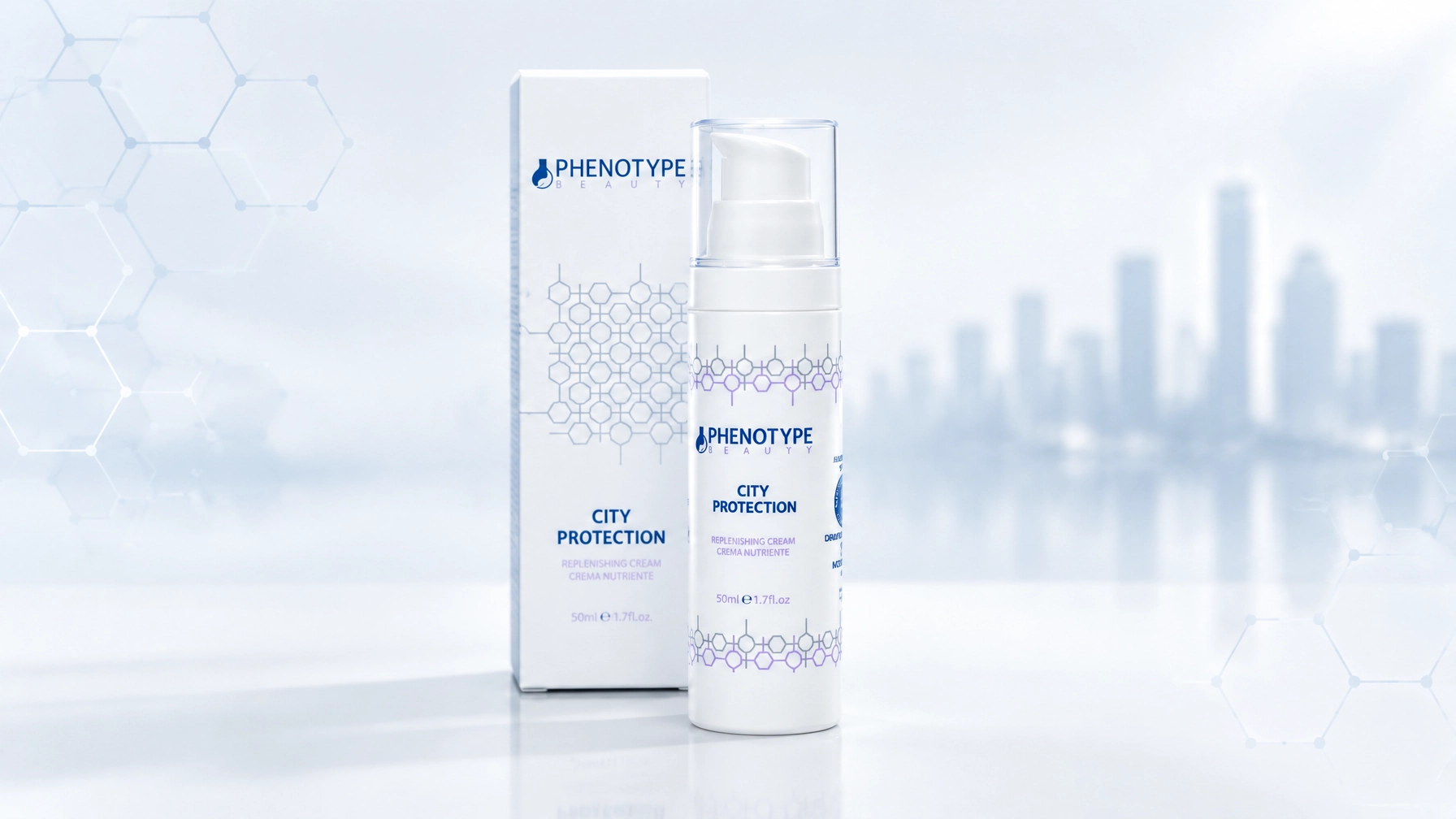
City Protection Replenishing Cream: one product, two functions
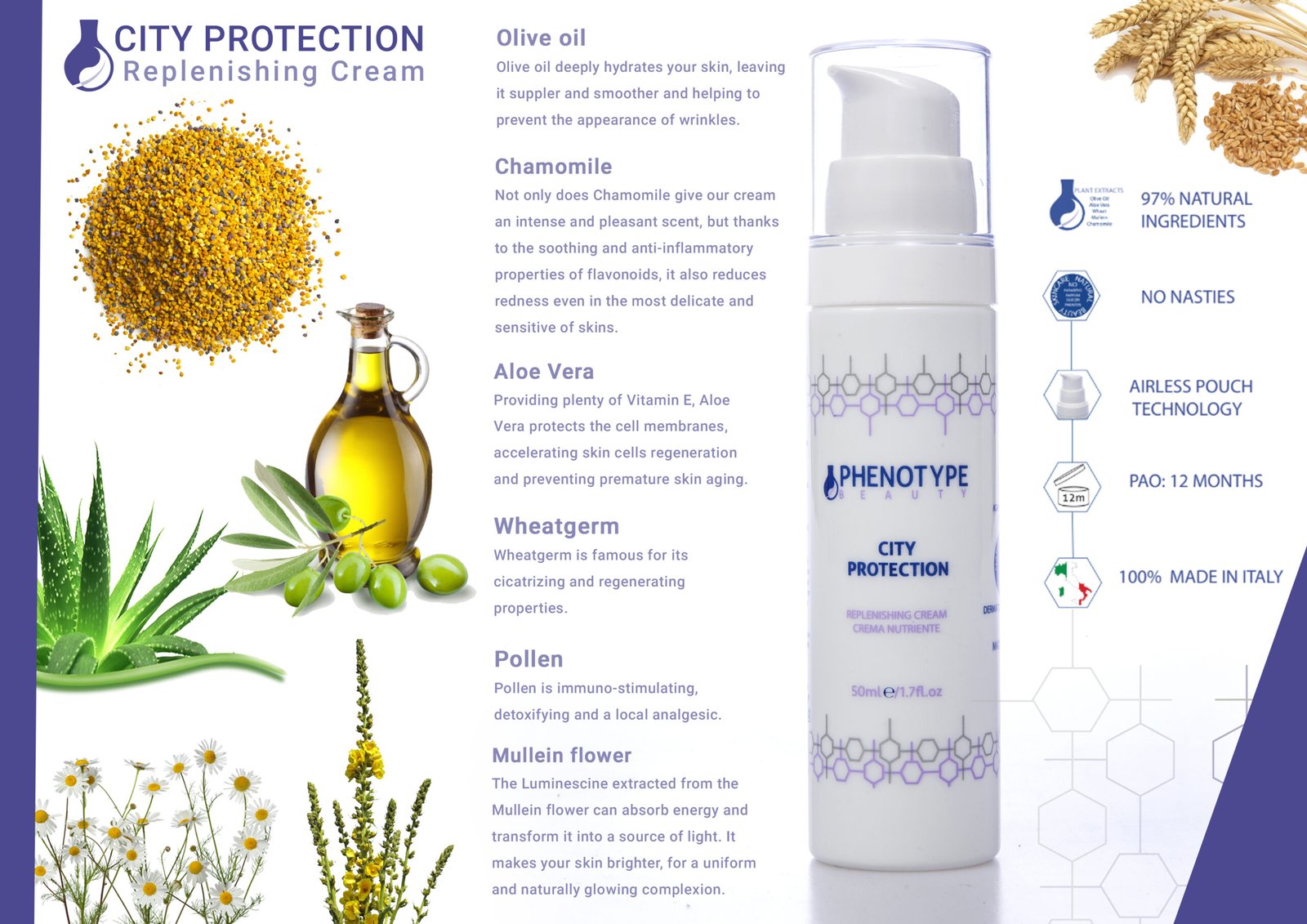
The City Protection Replenishing Cream is designed for sensitive, dry, and allergy-prone skin exposed to daily urban stress.
According to the product information, it is intended to:
- Provide deep, long-lasting hydration
- Support the skin’s natural hydrolipidic film
- Help protect against smog, dust, and environmental pollutants
- Reduce the effects of dryness and environmental stress
- Support a healthier, more comfortable-looking complexion
The product is positioned as a combined sensitive skin moisturiser, barrier-supporting cream, and urban protection treatment. This means it is designed to cover both functions without requiring a separate barrier cream and anti-pollution cream.
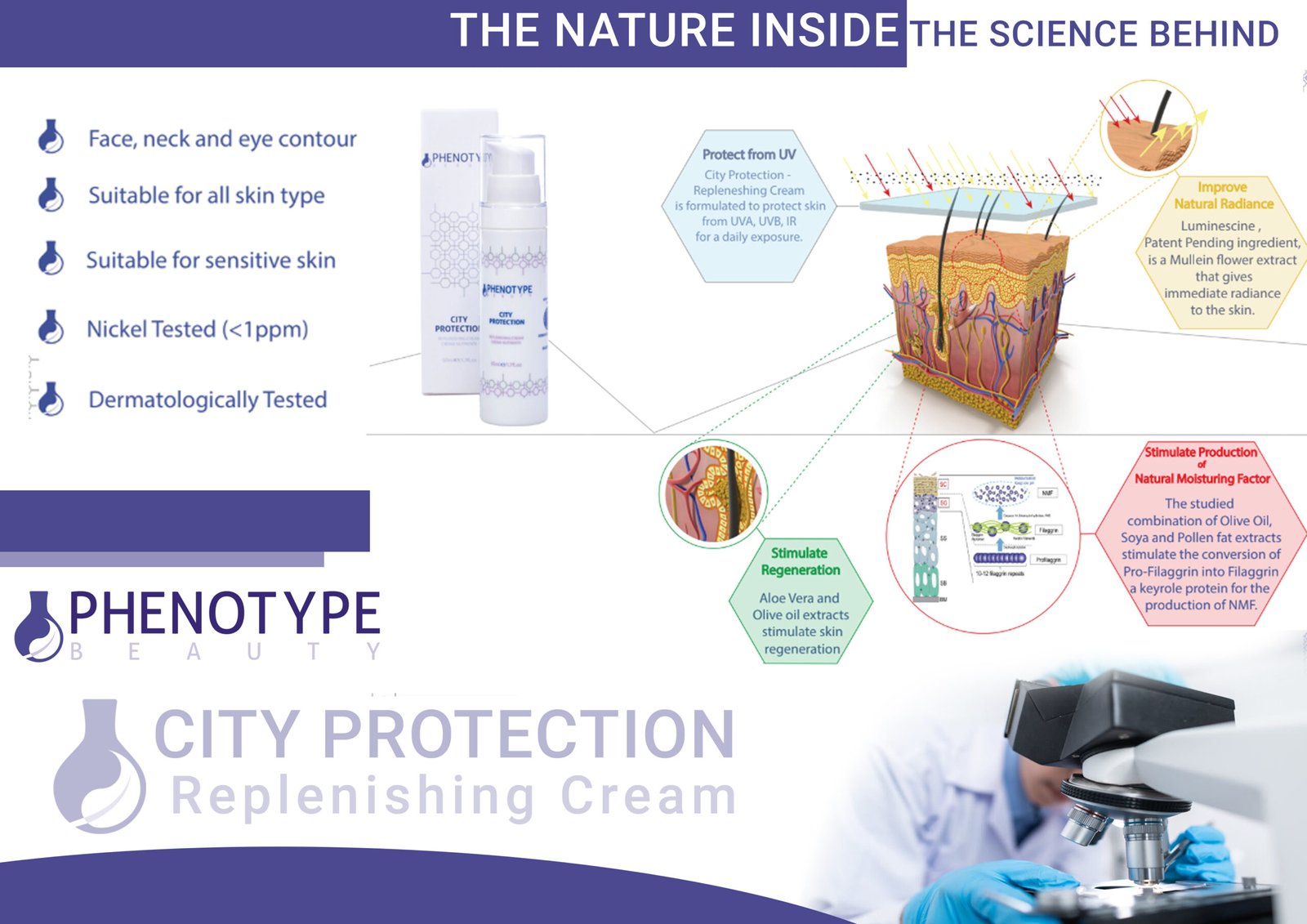
Use it as the moisturising step in the morning and evening. Apply sunscreen separately during the day. If your skin is highly reactive, introduce it gradually and patch-test before applying it to the full face.
Read the related Phenotype Beauty skincare guidance for additional information about sensitive-skin routines and product use.
Which one should you use first?
Use this decision guide:
Choose a barrier repair cream first if:
- Your skin feels tight or dry.
- Products sting when applied.
- You experience flaking or rough patches.
- Your skin is recovering from over-exfoliation.
- You have sensitive or allergy-prone skin.
- Your main concern is moisture loss.
Consider an anti-pollution cream if:
- You spend significant time near traffic or construction.
- You work outdoors or in a high-pollution environment.
- Your skin becomes dull or uncomfortable after city exposure.
- The formula provides tested protection and is well tolerated.
- It adds a function that your current moisturiser does not provide.
Use one product that does both if:
- You want a short routine.
- Your skin needs hydration and environmental support.
- You react to frequent product changes.
- The product has credible barrier and pollution-related claims.
- It works comfortably under sunscreen.
Final answer
Most people do not need two separate creams. They need the right combination of functions.
For dry, sensitive, or allergy-prone skin, prioritise barrier support. For city exposure, add environmental protection and daily sunscreen. If one formula provides hydration, supports the hydrolipidic barrier, and helps shield the skin from pollutants, it can simplify the routine.
Choose the smallest routine that meets your skin’s needs. Patch-test new products. Stop use if irritation develops. Seek professional advice for persistent redness, eczema, burning, or a worsening rash.
Sources and further reading
- The role of ceramides in skin barrier function
- The importance of correct ceramide formulation
- Impact of airborne particulate matter on skin
- Research on anti-pollution skincare
- Iron oxides and visible-light protection
Leave a Reply