

Nickel can be present in cosmetics in very small amounts, even when it is not listed as an ingredient. For most people, trace amounts do not cause a problem. For someone with a nickel allergy, however, exposure may contribute to an itchy, red rash where the product touches the skin.
A “nickel-tested” claim can help guide product choices, but it does not mean every person with a nickel allergy is guaranteed not to react. Here is what the test can tell you, what to check on a label and when to seek professional advice.
What is nickel, and how can it get into skincare?
Nickel is a naturally occurring metal. It is not usually added to skincare as an active ingredient. Instead, small traces can enter a product through raw materials or during manufacturing. Possible sources include:
- Water or plant-derived ingredients.
- Mineral pigments and powders.
- Processing equipment or other points in production.
The amount can vary by ingredient, product and batch. The U.S. Food and Drug Administration’s testing of cosmetics found nickel in some products, including certain makeup products. Detecting nickel does not, by itself, show that a product will cause a reaction. The amount present and how much is released from the product matter.
What is a nickel test in skincare?
A nickel test is a laboratory analysis used to check whether nickel is present in a cosmetic and, in some cases, to measure how much. Testing the finished product can provide more relevant information than relying only on ingredient lists, because nickel may be present as an unintended trace.
Testing can measure the product’s total nickel content. It may use laboratory techniques such as ICP-MS, which can detect and measure very small quantities of elements. However, total nickel does not necessarily show how much nickel is available to contact the skin. Some nickel may be bound within mineral particles and may not be readily released.
“Nickel-tested” is not a universal guarantee of safety, and the wording alone does not tell you the test method or result. Ask the brand or manufacturer for details such as:
- Whether the finished product was tested.
- The result and the batch tested.
- The testing method and its detection limit.
- Whether the test measures total nickel or nickel release.
There is no single cosmetic nickel level that guarantees no reaction for every nickel-allergic person. A result should be interpreted in context, including the product type, how it is used and your own sensitivity.

How does nickel allergy affect skin?
Nickel allergy is a form of allergic contact dermatitis. It is a delayed immune response: after exposure, symptoms may develop hours or days later. The affected area can become itchy, red, dry or swollen, and may develop small bumps or blisters.
Nickel is one of the most common causes of metal contact allergy. A confirmed allergy means the immune system has become sensitized to nickel. It does not mean that everyone with sensitive skin has a nickel allergy, or that every trace exposure will cause a flare-up.
A weakened or irritated skin barrier may make the skin more vulnerable to discomfort from many triggers. But a rash can have several causes, including fragrance, preservatives, other ingredients, or a skin condition. A nickel test on a cosmetic cannot diagnose the cause of an individual rash. A dermatologist can assess the symptoms and may use patch testing to investigate allergic contact dermatitis. The American Academy of Dermatology explains patch testing as one method used to identify substances that cause allergic reactions.
Why may low-nickel or nickel-tested products matter?
If you have a diagnosed nickel allergy, reducing avoidable exposure may be useful, especially when a product is left on the skin or used regularly. A leave-on moisturizer stays in contact with the skin longer than a product that is rinsed off. Application to delicate, irritated or already compromised areas may also call for extra care.
This does not mean that every product containing detectable trace nickel will cause dermatitis. In a small study of people with nickel sensitivity, participants did not react to the tested mineral powders; the researchers noted that nickel availability from those products may have been too low to provoke a reaction. The findings are reassuring but do not predict how every person will respond to every cosmetic. Read the study.
A nickel-tested product may offer more information for someone trying to make a considered choice. It is one detail to weigh alongside your diagnosis, the product’s intended use and your skin’s history. If you have reacted before, ask your dermatologist or contact-dermatitis specialist for advice on choosing products.
What should you look for on a skincare label?
Check the full ingredient list and look for clear, specific information from the brand. Keep in mind that nickel contamination may not appear as a named ingredient, since it can be an unintended trace.
Use this checklist:
- Look for a clear testing statement. “Nickel-tested” should ideally be supported by information about finished-product testing and the result.
- Ask for details if needed. Contact the manufacturer to ask about the test method, batch and detection limit.
- Check for your known triggers. A nickel-focused claim does not tell you whether a product contains other ingredients that have caused you a reaction.
- Treat “hypoallergenic” as a description, not a promise. It does not guarantee that a product will suit every person or prevent every allergy.
- Follow your clinician’s guidance. If you have a confirmed allergy, use your patch-test results to guide product choices.
A small patch of product on the skin may help you notice irritation, but it cannot replace medical patch testing or guarantee that a product will not cause a delayed allergic reaction. Stop using a product if it causes a reaction, and seek medical advice for persistent, severe or recurring symptoms.

Choosing a moisturizer for sensitive skin
For sensitive or allergy-prone skin, a simple routine can make it easier to identify products that suit you. Choose a gentle cleanser and moisturizer, avoid ingredients you already know trigger symptoms, and introduce new products one at a time.
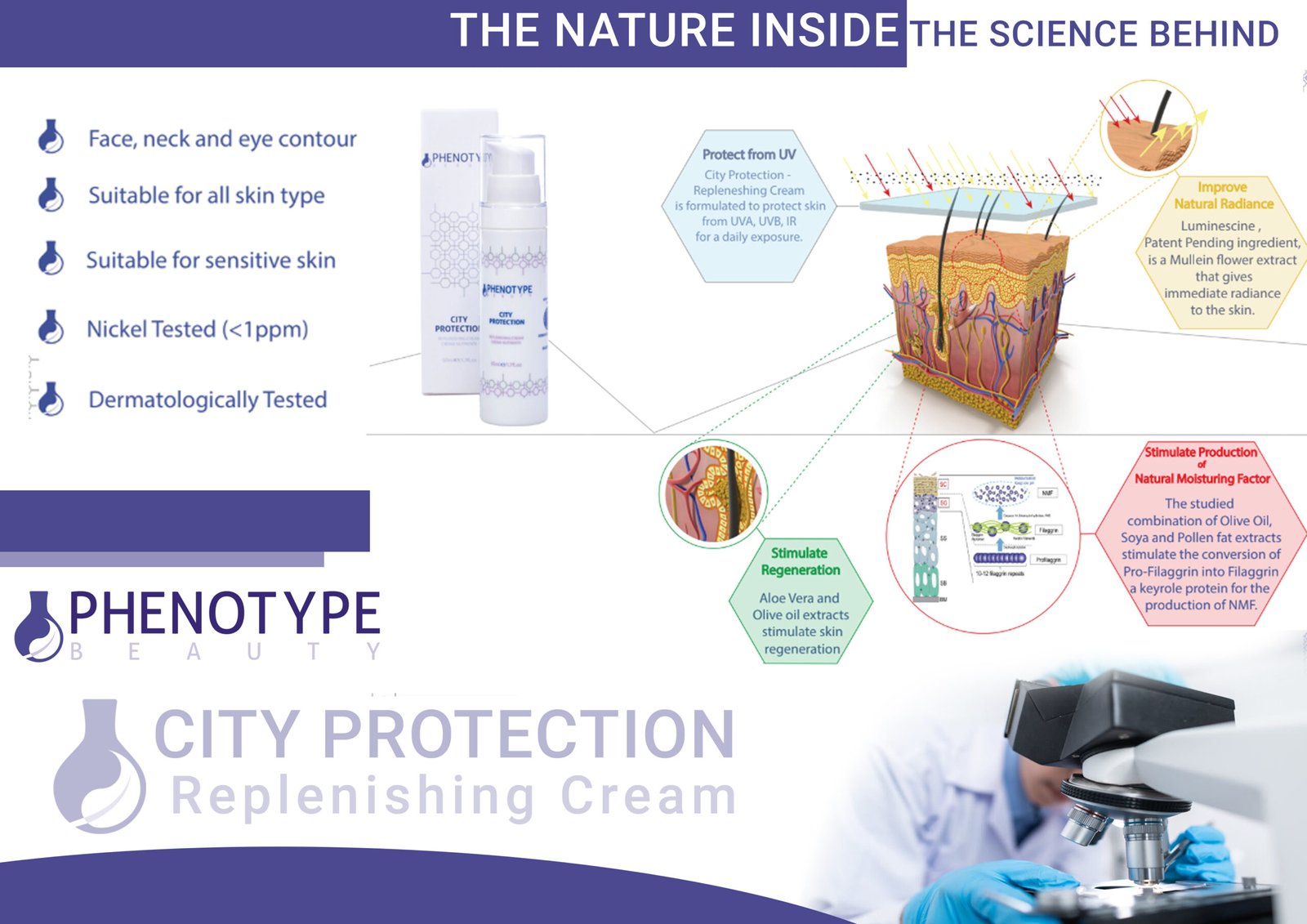
Phenotype Beauty’s City Protection Replenishing Cream is a fragrance-free, 97% plant-based moisturizer formulated for sensitive, allergy-prone skin. It is designed to provide hydration and support the skin barrier. These features may be relevant when comparing a fragrance free moisturizer or looking for skincare for sensitive skin. They do not establish the cream’s nickel content or mean it has been nickel-tested. Contact the brand directly if you need information about nickel testing.
Key points
- Nickel can occur as trace contamination in cosmetics, even when it is not intentionally added.
- Nickel allergy can cause delayed itchy, red or inflamed skin where exposure occurs.
- A nickel-tested claim is most useful when the brand can share the finished-product result and testing details.
- Total nickel content does not always show how much nickel can reach the skin.
- No label can guarantee a product will suit every person with sensitive skin or nickel allergy.
- Ask a dermatologist about persistent reactions or suspected contact allergy.
For more information about the product, visit the City Protection Replenishing Cream page or contact Phenotype Beauty.
Leave a Reply